How to Choose a Chiropractor in Jax Beach (What Actually Makes One Different)
Looking for a chiropractor in Jax Beach? The real question isn't which office. It's whether your care plan is working toward a measurable result, improving how your child's body functions, or just quieting the symptom.
Search "chiropractor jax beach" and you'll get a wall of five-star ratings, gold stars, and smiling stock photos. Every practice looks the same. None of it tells you the one thing that actually matters: what kind of care are you signing up for?
Not which office. What kind. Because underneath the star ratings, there are really two different ways to approach almost any health problem, and that difference matters far more than the logo on the door.
Here's how to tell them apart.
Two ways to approach almost any health problem
This isn't really a chiropractic question. It runs through all of healthcare.
One approach manages the symptom. Something hurts, something is inflamed, something won't settle, so you quiet the signal. Sometimes that's exactly what you need. A high fever, a real infection, an acute injury: you treat it, and thank goodness we can.
The other approach asks a different question: why is the body producing this signal in the first place, and can we change it? Instead of turning the alarm down, it works to improve how the body is actually functioning, and then measures whether that function is moving in the right direction.
Both have a place. The trouble starts when a long-running issue, the kind that keeps coming back, only ever gets the first approach. The colic becomes reflux. The reflux becomes the toddler who won't sleep. Each visit quiets one more alarm, and the underlying pattern never changes. That's the cycle parents describe as the merry-go-round, and you can ride it for years.
So here's a simple test for any care plan, whether you're sitting across from a pediatrician, a specialist, or us: is something measurably getting better, or are we just keeping the symptoms quiet?
What "improving function" actually looks like
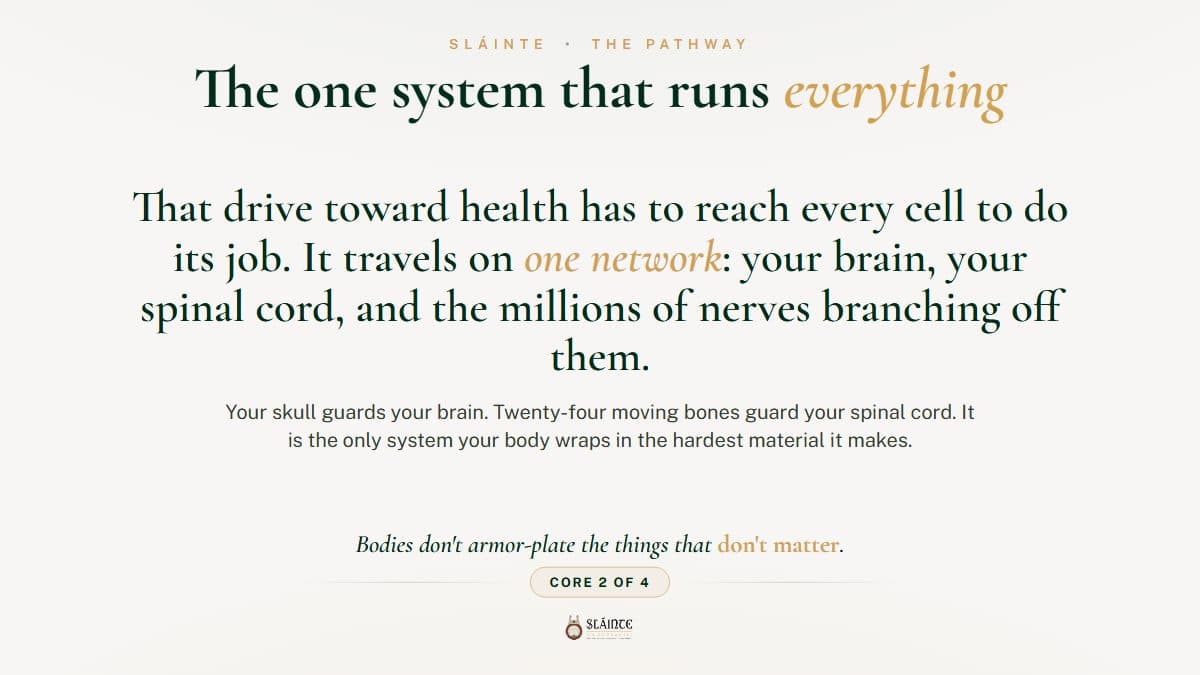
In our office, the thing we're working to improve is nervous-system function, because that's the system coordinating digestion, sleep, immune response, mood, and development. The spine matters only as the housing for it. So before anyone touches your spine, we measure it.
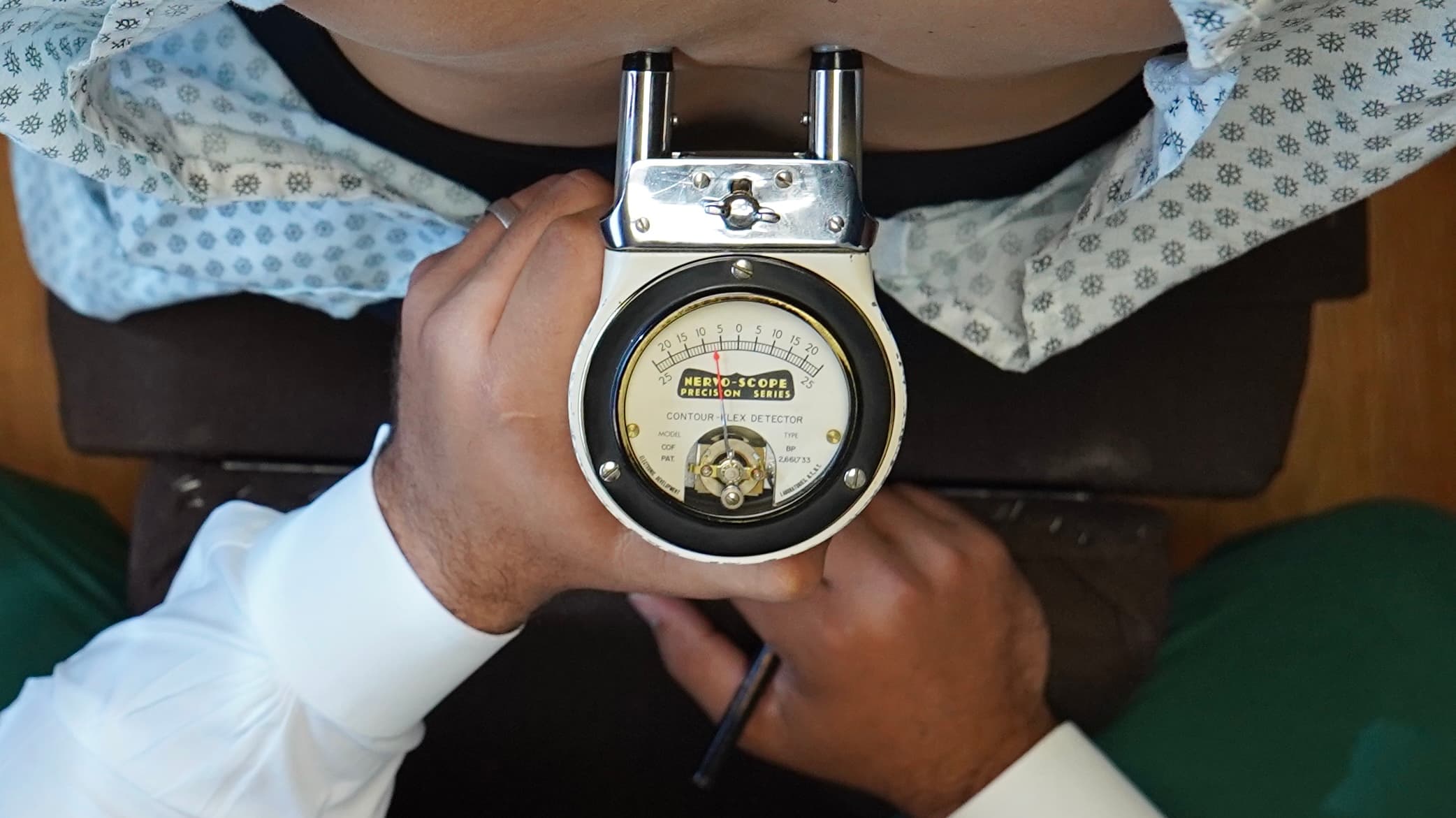
We use the Gonstead system, one of the most precise analyses in chiropractic. It works through five steps: visual analysis, a thermal scan that reads nervous-system activity, static and motion palpation by hand, and X-ray only when it's clinically necessary. The point is to find the one spot creating interference, and correct only that.
Snipers, not shotguns. The skill isn't in the size of the adjustment. It's in the specificity.
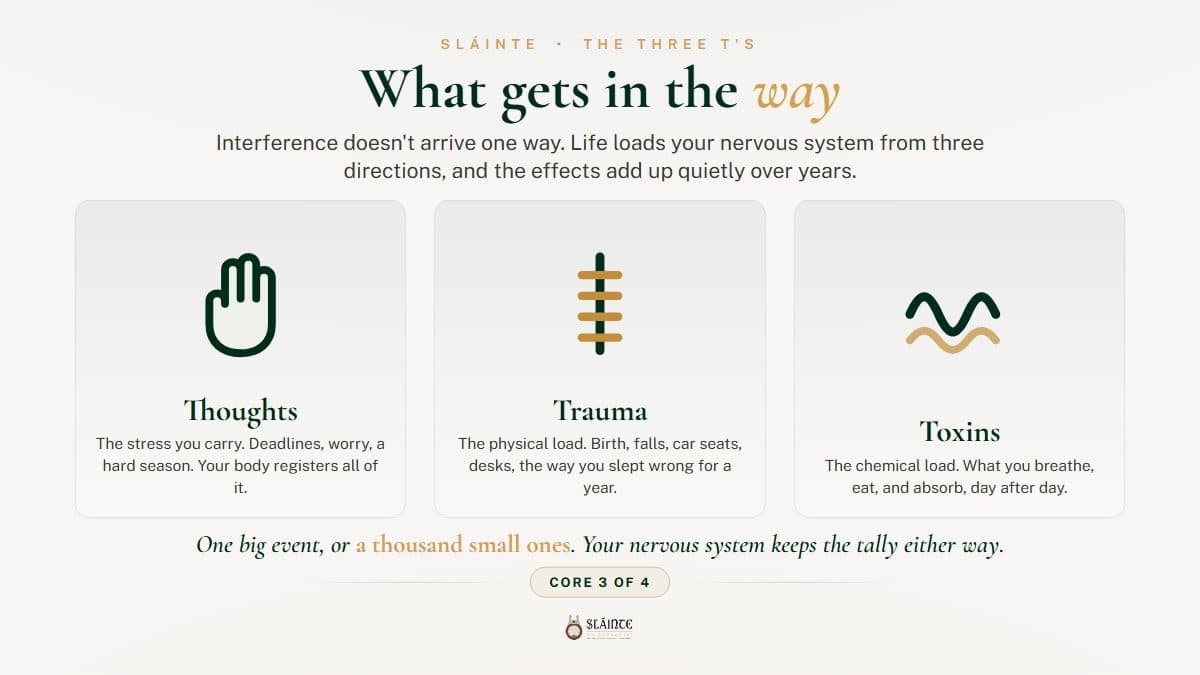
And the result is something you can see, not just something you feel. We run nervous-system scans before and after, so the change shows up in color, on a screen, in front of you. Researchers have measured it at the level of the brain, too. A 2016 study in Neural Plasticity from Dr. Heidi Haavik's research group (Lelic et al.) found that a single adjustment reduced activity in the brain's prefrontal region by about 20%. We don't guess. We measure. That's what a plan built on function, rather than symptom relief, is supposed to give you: a number that moves.
"But is it safe, especially for my baby?"
It's the first thing most parents ask, and it's exactly the right question. A baby's adjustment is nothing like an adult's. The pressure is about what you'd use to check a ripe avocado, a fraction of the force a newborn's neck already handled during birth. You might hear a small "pop," like a knuckle cracking. That's just a little gas releasing from the joint, not a measure of force. Every contact is matched to the age and size of the child.
That's really the whole point of precise care: it's gentle because it's specific. The goal isn't to do more. It's to find the one thing that's getting in the way, and clear it.
Rooted at the beach, serving the whole First Coast
Sláinte Chiropractic sits at 2370 3rd St S in Jacksonville Beach, and families drive in from across the beaches (Atlantic Beach, Neptune Beach, and Ponte Vedra) for pediatric, prenatal, and family nervous-system care. It's a family practice in the literal sense, led by Dr. Vincent Farrar, D.C., a Diplomate in Clinical Chiropractic Pediatrics (DICCP) with 1,000+ hours of pediatric-specific training, alongside Dr. Bridget Farrar, D.C. With 400+ five-star reviews, it's become one of the more trusted family chiropractic homes at the beach, not because of a marketing budget, but because parents tell other parents.
"My daughter had been on antibiotics for almost a year due to chronic ear infections and was about to get tubes. We tried chiropractic as a last resort. She has not had a single ear infection since."
Will Roberts, Jax Beach dad of four
Individual results vary. Chiropractic care does not diagnose, treat, or cure any disease or condition.
Start with a conversation, not a commitment
The best way to know if a practice is right for your family is to be listened to before anything else happens. That is exactly how your first visit at Sláinte starts. You tell us what's going on and what you've tried, we measure what's actually happening, and we tell you honestly whether we can help. No referral, no insurance hoops, no pressure.
Written by Dr. Vincent Farrar, D.C., DICCP, CACCP · Sláinte Chiropractic, Jacksonville Beach (Jax Beach), FL
Ready to put this into practice for your family?
Your first visit includes our INSiGHT nervous system scans. X-rays, if clinically necessary, are always discussed with you first.
Continue Reading