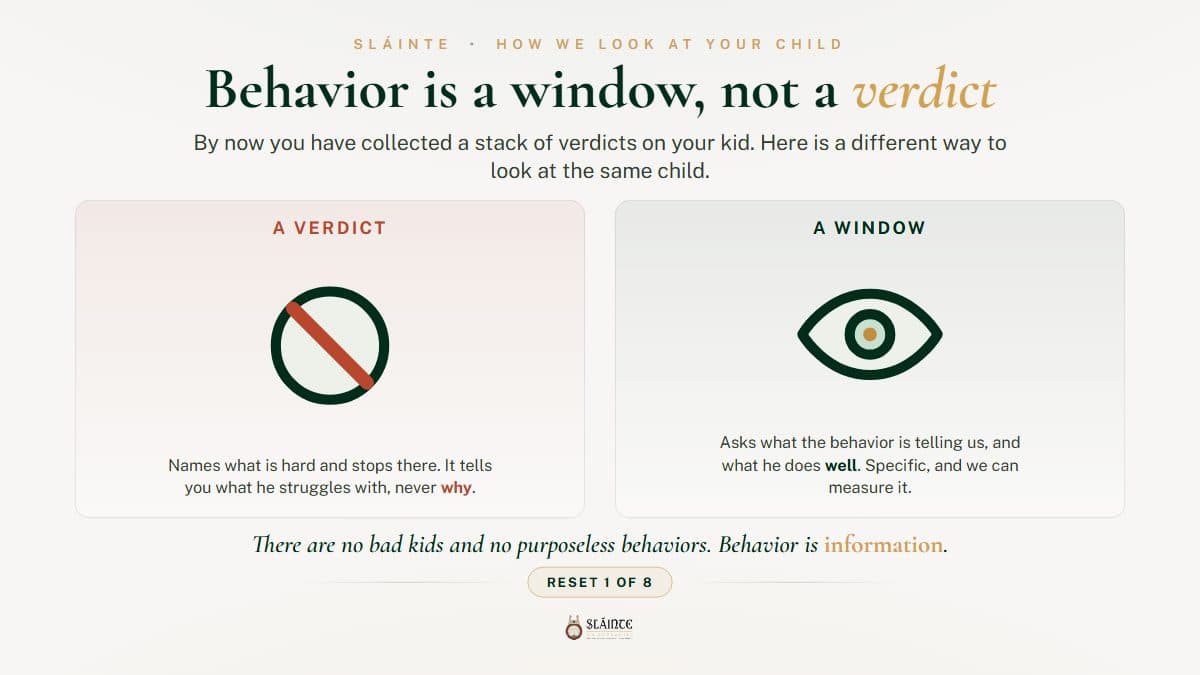
Most parents of a struggling child are exhausted for a specific reason: they're being asked to make big decisions in the dark.
Try this diet. Consider this medication. Add this therapy. Each one might help. But nobody has handed them an objective read on what's actually happening inside their child, so every decision feels like a high-stakes guess.
Our whole method exists to close that gap, and it's simpler than it sounds. Three steps.
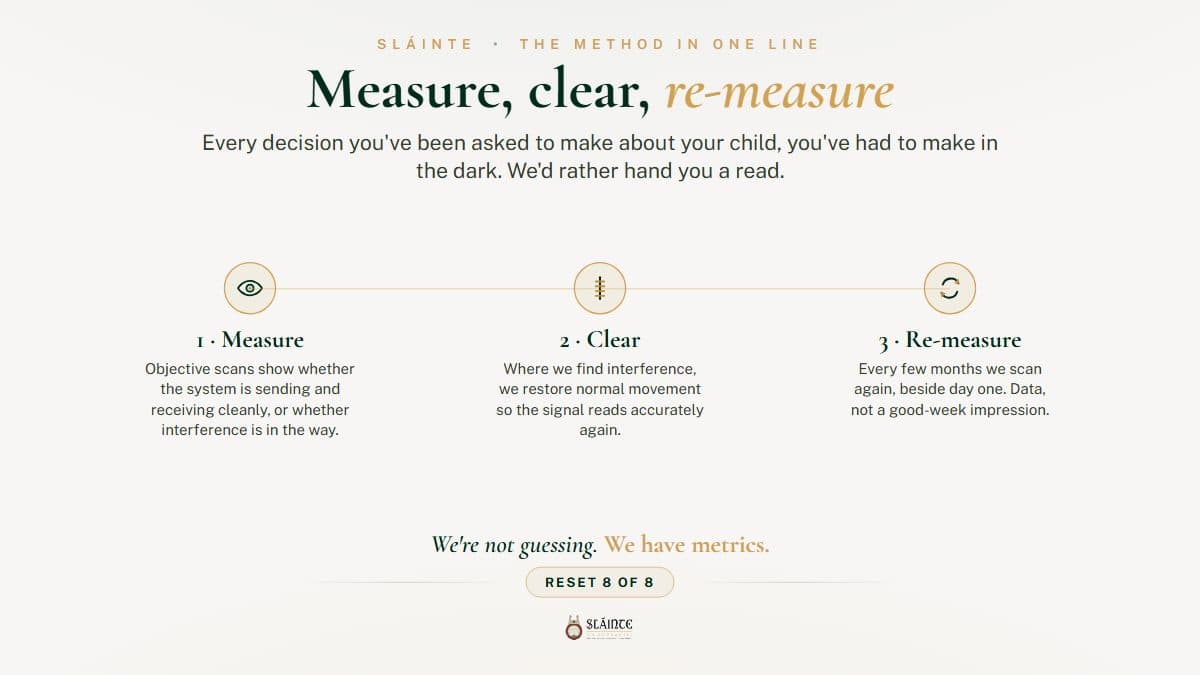
First, we measure. We use objective scans to see whether your child's nervous system is efficiently sending and receiving information, or whether there's interference getting in the way. It isn't a behavior questionnaire and it isn't a judgment call. It's a look at how the system is functioning.
Second, we clear. Wherever we find interference, we work to restore normal movement and clean up the signal, so the brain gets an accurate read of the body again.
Third, we re-measure. Every few months we scan again and set it side by side with where we started. That third step is the one that matters most, because it replaces a good-week impression with data. You get to see whether the system actually changed.
Measure, clear, re-measure. We don't guess.
It's also why I can stay straight with you at every step. We're tracking a system, not chasing a symptom and not treating a diagnosis. Which is exactly why this runs alongside your pediatrician and your therapist rather than instead of them. Think of it as the read on the one layer nobody else was set up to measure. You keep your whole team. We add the missing data.
One last thing to expect, because it's the piece that trips families up.
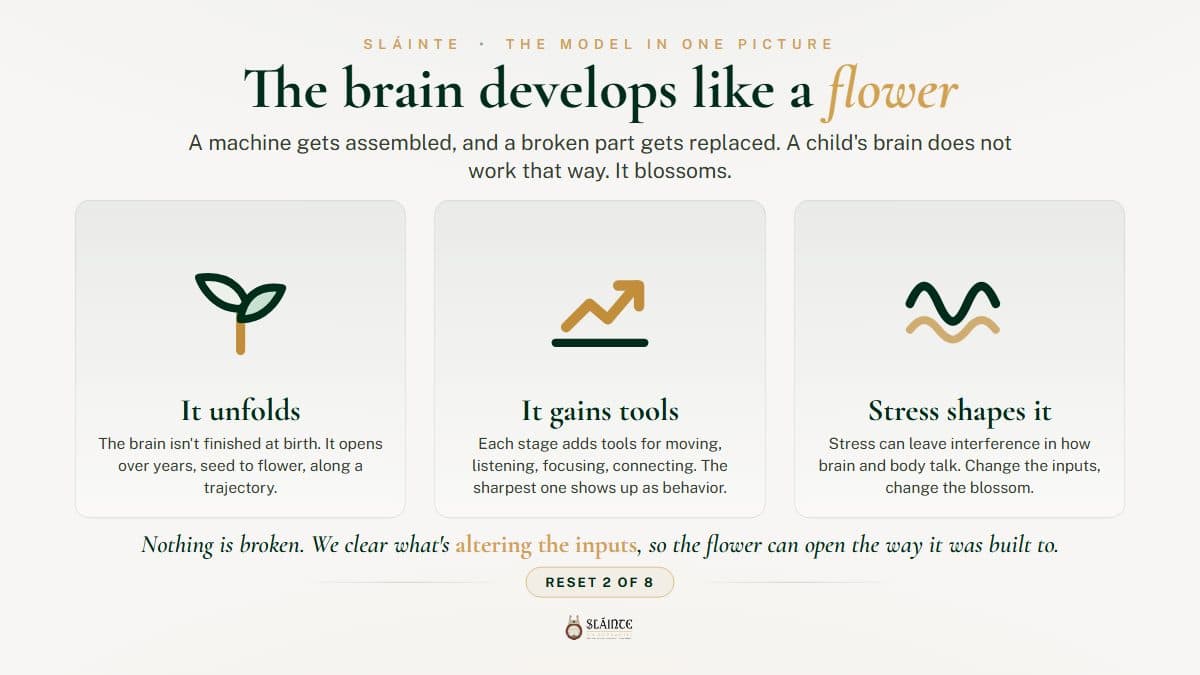
Healing isn't a straight line. Very often, right before a real leap, a child pulls in a little. A bit more emotional. A bit more sensitive. In what we see, that's usually not going backward. It's another window into a changing brain.
So if it ever feels like things got harder, don't disappear on us. Tell me that day. It's my job to know the difference between a pulling-in and something that needs more support, and either way, I've got you.
Keep reading: The Nervous System Reset
Individual results vary. Chiropractic care does not diagnose, treat, or cure any disease or condition. This information is educational and not a substitute for medical care. Sláinte provides wellness chiropractic care and works alongside your medical team.
Ready to put this into practice for your family?
Your first visit includes our INSiGHT nervous system scans. X-rays, if clinically necessary, are always discussed with you first.